

Where fresh water meets salt water, something remarkable happens. Estuaries are places of constant change, and Martin County sits in the middle of two of them — the St. Lucie Estuary and the Indian River Lagoon.
National Estuaries Week runs September 20–27, 2026, and Florida Oceanographic Society is using it to explain why these waters matter so much to the people who live beside them.
What is an estuary?
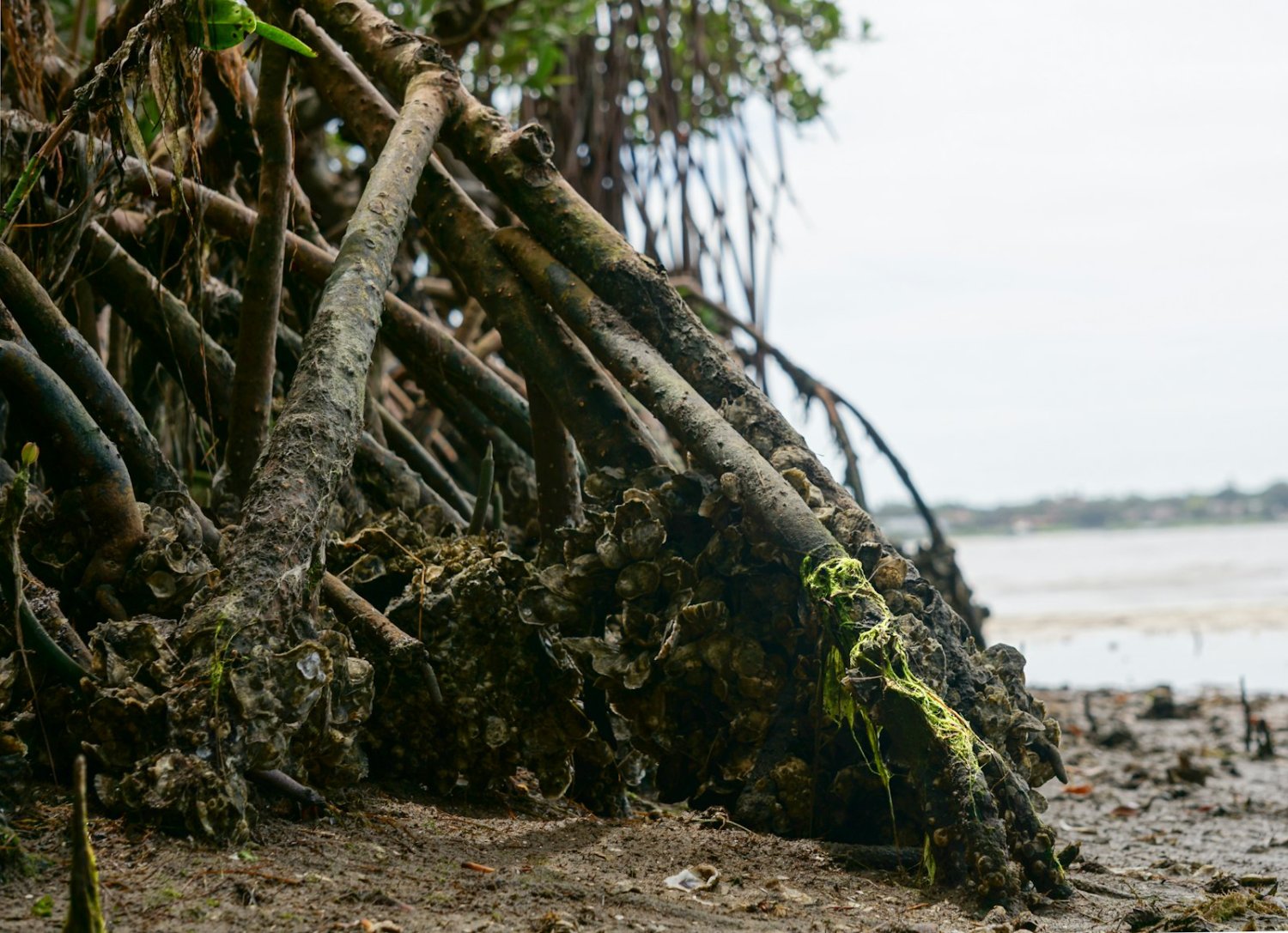
An estuary is a partly enclosed body of water where fresh water flowing from rivers and streams mixes with salt water from the ocean. The result is brackish water that falls somewhere in between. But an estuary is more than the place two kinds of water meet. It is a set of connected habitats: seagrass meadows, mangrove forests, salt marshes, oyster reefs, mudflats, tidal creeks, coastal wetlands and shallow bays.
Each of those habitats provides food, shelter or nursery grounds. And because conditions shift constantly with tides, rainfall, river flow, temperature and salinity, the plants and animals that live there have developed some remarkable ways to survive.
The nurseries of the sea
Estuaries give young marine animals protected water to grow up in. Compared with the open ocean, they offer shallower, calmer conditions and plenty of food. Juvenile fish hide from predators in seagrass beds, oyster reefs and mangrove roots until they are big enough to move on.
That is why they are called the nurseries of the sea. NOAA reports that more than 75 percent of the fish and shellfish harvested in the United States depend on estuary habitat at some point in their lives. The health of the water off Stuart connects directly to seafood served hundreds of miles away.
Nature’s water treatment
Estuaries also clean what flows through them. Water running off the land carries nutrients, sediment and sometimes pollutants toward the coast. Wetlands, seagrasses, marshes and mangroves capture sediment and absorb or transform much of the rest before it reaches the open ocean.
Lose those habitats and the filter goes with them — which is why restoration work on oyster reefs and seagrass beds shows up so often in local headlines.
Information provided by Florida Oceanographic Society. Read the full piece at floridaocean.org.
Love what you're reading?
Get the best of Martin County delivered to your inbox every month — local stories, events, and good news worth sharing.
Subscribe for Free